Product CGI Films · XO3D Studio
Product launch films, made in CGI.
Director-led films. Every frame has an intention.
XO3D makes product launch films for tech, industrial and premium consumer brands. A named Creative Director shapes the product reveal, camera, materials, edit and sound around what your audience needs to understand and feel.
Selected clients
Sony work via ImageNova. Ferrari and Burberry work via KCD.
Planning your brief
Updated
What is a product launch film?
A product launch film introduces a product to its market. XO3D makes it in CGI, with a named Creative Director responsible for the idea, camera, materials, lighting, edit and sound. Working from CAD and agreed references, the film can be made before a physical unit is ready to shoot. The master film and any campaign versions are scoped around the audience, story, channels and launch date.
Questions before you briefInside a real brief · AUAR MicroFactory
From a system to a story.
AUAR needed a CGI suite for its website launch. The supplied model, movement references and brand guidance became a 36-second film, 24 stills and supporting loops. Follow the decisions from the storyboard to the delivered formats.
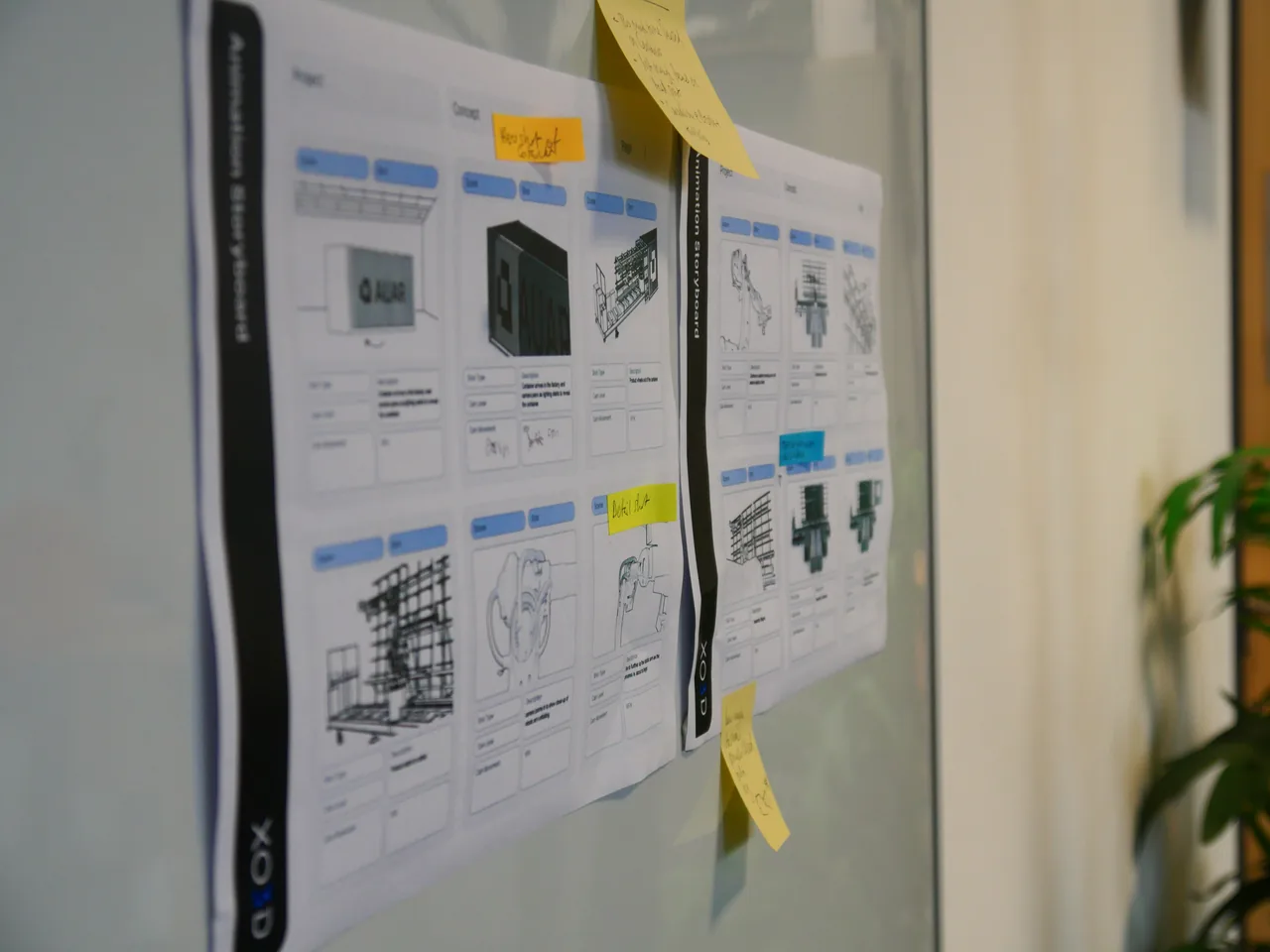
01 · Plan the story
Reach the working sequence sooner.
The film had two main story beats: deployment from the container, then the robot building a timber panel. A short container-to-robot transition brought the working sequence forward. Close-ups of the mechanisms supported that story.
The decision: give screen time to the actions that explain the system.
02 · Review the shot
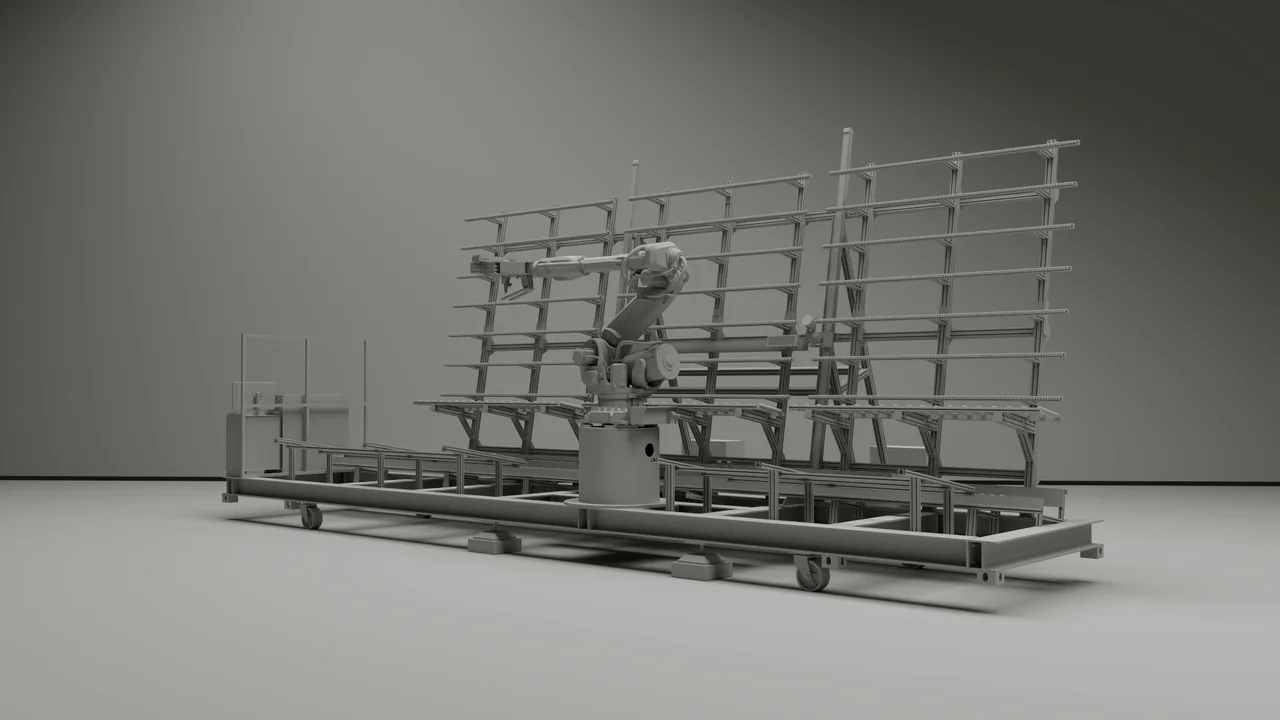
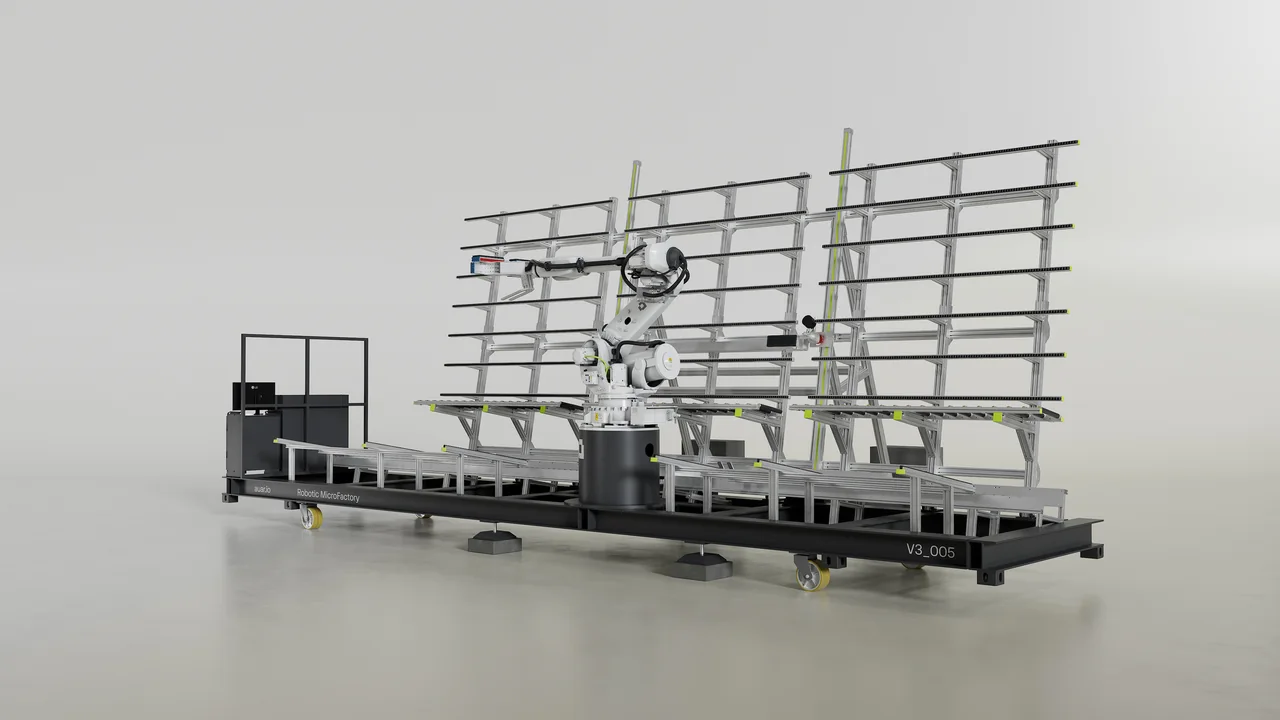
Settle the camera before the finish.
AUAR's camera and staging were locked in the grey pass before materials and lighting were added. The paired A05 frames show those two stages without changing the composition.
The review: check the view, movement and timing while the shot is still in greycard. Review finishes and lighting at the next stage.
03 · Watch the film
One system. Two story beats.
The final cut connects the container, deployed robot and panel-building sequence. Wide shots explain the system; close views show the grippers, tooling and rails.
The result: a 36-second film for this brief. Running time follows the product story; this is a project example, not a fixed format.
04 · Adapt the format
One launch. Different frames.
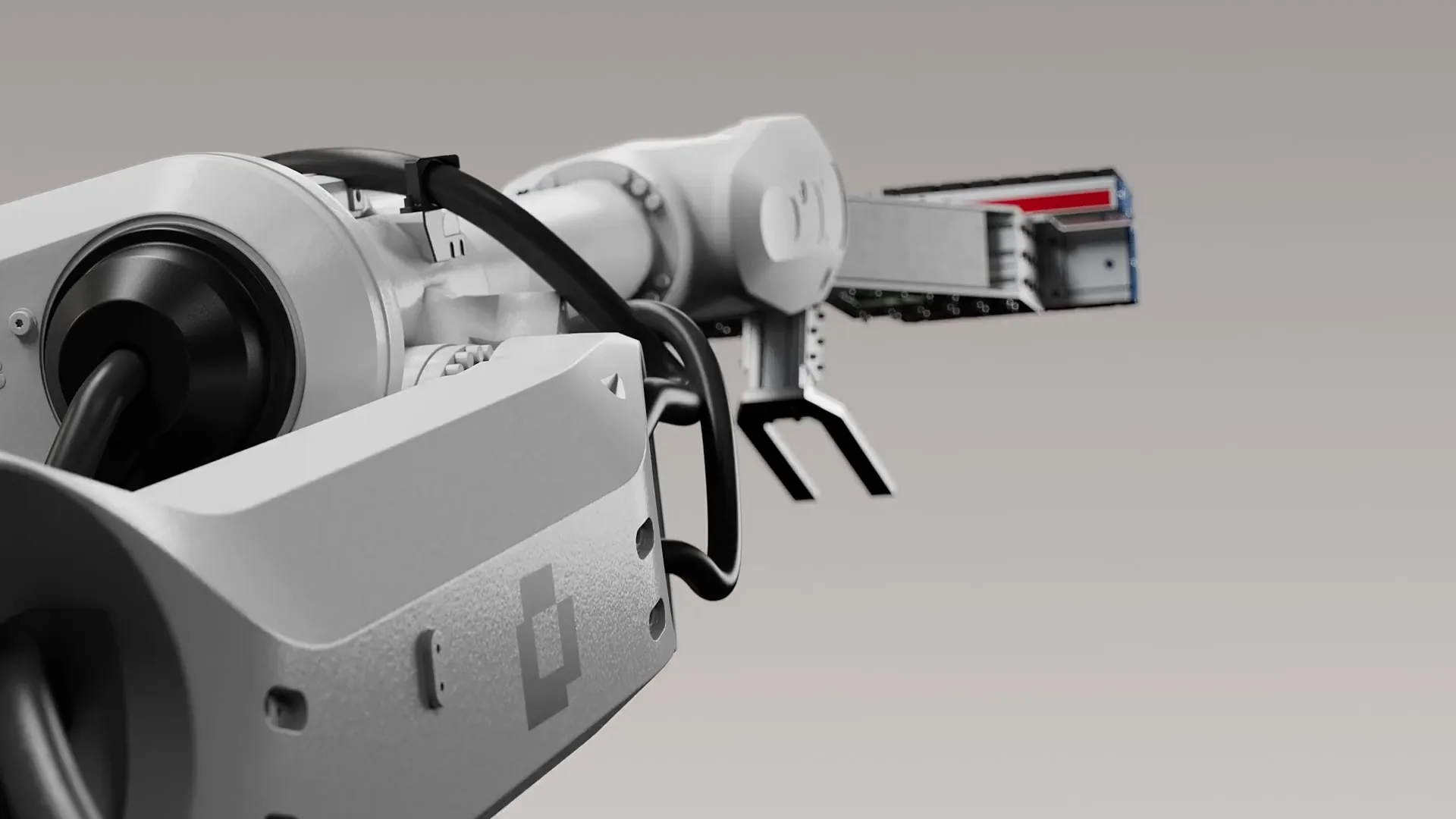
The 36-second landscape master and this four-second vertical shot serve different placements. The wide film establishes the system; a vertical sequence gives the product its own frame on a phone.
The brief: specify placements before production. Plan extra render canvas where a crop works, or a separate camera where the composition needs it.
Production account: Connor Hamilton-Smith, Creative Director on AUAR. Explore the complete AUAR project and credits
On whether a product launch film needs a VFX house
If you are launching a product, you don't need a VFX house to get VFX. At XO3D we have the tools to bring VFX into the launch film and the stills.
What a product launch film from XO3D looks like
Four formats, one creative standard.
The G-Lab: a 40-second keyboard launch film with product detail, lighting sequences and custom sound design. See the G-Lab project
BLOQ.it: a 54-second product film, supported by feature sequences and ten CGI stills. See the BLOQ.it project
Nanuskate: a modular skate ramp launch film with commissioned campaign cutdowns. See the Nanuskate project
Compare Nanuskate campaign cuts
Petalite: EV charging infrastructure explained through product, engineering and contextual CGI. See the Petalite project
Choose the film by its job
What is the film for?
Start with the job the film has to do, then the length and format follow. For definitions of the broader terms, see the product CGI guides and the CGI glossary; this page is about commissioning a film.
| Film | Purpose | Source input | Delivery decision |
|---|---|---|---|
| Introduction | Present a new product and the one quality it must be remembered for | Approved CAD or drawings, finish references, brand guidance | Master length and the channels the launch runs on |
| Explanation | Show a mechanism, a technology or how parts work together, usually as a longer feature film | Engineering data for every moving or hidden part, and who approves the movement | Whether it needs labels, voice-over or captions, and where it will be watched |
| Campaign set | Carry one idea across paid, social, retail and web placements | The hero film's approved shots, plus each placement's specification | Which aspect ratios get a reframed crop and which need their own camera |
| Stakeholder communication | Help investors, partners or a sales team understand a product, often before it is made | The current design revision and any claims that need formal sign-off | The presentation screen or format, and whether a silent version is needed |
Channel delivery checklist
Agree these for each placement before final production. A film-only job agrees them once, for the master; a campaign suite agrees them for every version.
- Aspect ratio for each placement, such as 16:9, 9:16, 1:1 or 4:5.
- Duration of the master and of each cut.
- Playback and codec: ProRes or H.264, frame rate and resolution, as in the production specifications.
- Sound and music: whether the placement plays with sound, and the usage the music is licensed for.
- Captions: SRT or VTT files, or burned-in subtitles.
- First-use date for each version.
A retailer, event screen or agency pipeline may have its own requirements. Send them before final production. To prepare, read the Labs guides on how to brief a product animation and CGI video delivery specs.
How we make product films
What you review. What you approve.
Name a lead approver and technical reviewers. Collate their comments for each stage, with senior decision-makers able to see what is being signed off. Agree review dates and deliverables in the brief.
- 01
Storyboard & animatic
A timed sequence before final production.
- You review
- The story, shot order, product reveals and running time.
- You approve
- What the film communicates and how the sequence unfolds.
- 02
Greycard
Camera and motion without final finishes or lighting.
- You review
- Camera angles, composition, product movement and timing.
- You approve
- The framing, motion and technical interpretation before the final look is built.
- 03
Materials & lighting
Product finish and light tests.
How the look is approved →- You review
- Surface finishes, colour references, highlights and the lighting treatment.
- You approve
- The product appearance against the supplied references.
- 04
Final film
The edit, grade and agreed sound.
Brief sound alongside picture →- You review
- The finished edit, sound and commissioned channel versions.
- You approve
- The final film and delivery set against the agreed brief.
- 05
Delivery
The master film, the versions, the commissioned assets and the sound agreed in your brief, delivered on the dates set in the brief, with versioned naming to your specification. Formats, frame rates and handover files follow our production specifications. On full payment the films, stills and any 3D model commissioned are yours. Production files such as scene setups, rigs and render configurations stay with the studio unless their handover is agreed and quoted before work begins; trust and security sets out the difference.
Planning guides for your film brief
Bringing CGI into a wider campaign? Explore CGI production for agencies, including our work with ImageNova for Sony and the inputs needed for a clear production handoff. For the shot language in a product film, see our camera shots guide. Before the animatic, see storyboard formats explained. For the stages behind a film, read animation production stages, step by step, and for why product films go wrong, our ten common mistakes.
Proof from real briefs
Product launch films XO3D has made.
The G-LAB, Keyz Hydrogen keyboard.
A 40-second launch animation with custom sound design for a compact RGB gaming keyboard, plus cross-channel cuts for web, social and product pages.
Flash Motors, Infinity X.
Two 40-second 4K films for the CES 2024 launch, one of the off-road electric scooter and one of its handlebar controller, used at the show and in social campaigns.
Infinity X scooter launch filmInfinity X controller launch film
Sony WF-C710, for ImageNova.
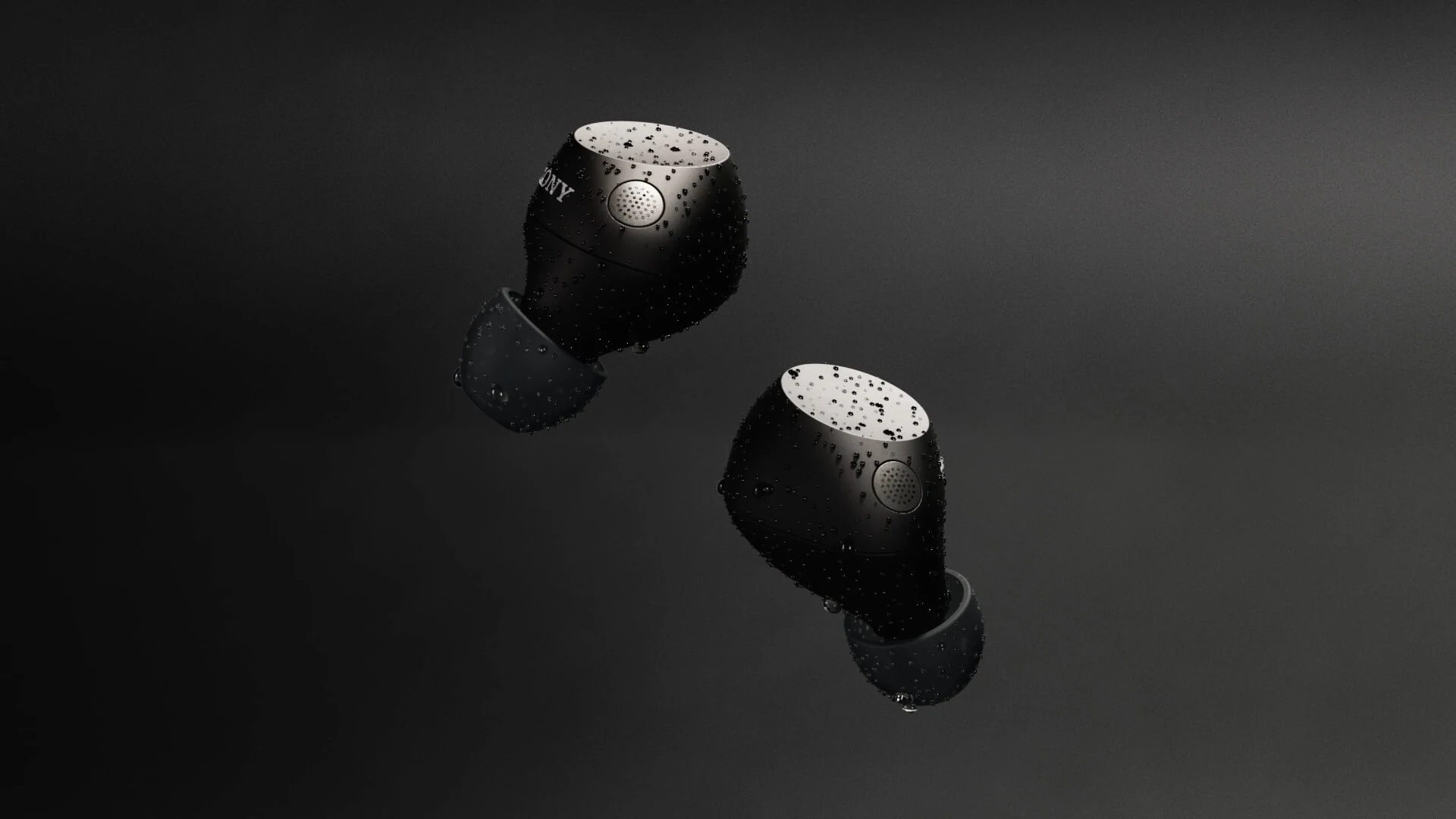
ImageNova produced and shot the launch commercial for Sony's WF-C710 earphones. XO3D's part was two short animated segments built to drop into that edit, plus rendered colourways composited into ImageNova's own product photography.
AUAR MicroFactory.
A different job: the whole content suite for AUAR's website launch. A 36-second hero film, 24 stills and looping motion assets, delivered within the two-month launch window while the still set grew from 14 to 24.
Nanuskate modular skate ramp.
Launch CGI made before full production: a 71-second launch film with cut-downs for product pages and social, all from one Master Asset.
ROEST P3000 coffee roaster.
A 34-second process film that takes the camera inside the roaster to follow the beans from loading through roasting to cooling, with the screen interface animated, plus still suites for the P3000 and the L100 sample roaster.
For mechanisms, explore exploded view and cutaway animation. For related work, see 3D product animation, Brand Motion and 3D product visualisation. Our production specifications cover formats. For background, read hero shots and what product CGI is.
The clients
The clients who commission product CGI films.
We work with brand teams and agency producers, on complete films and on CGI sequences for existing campaigns. The Sony WF-C710 work below was commissioned through ImageNova. For a luxury product example, explore jewellery and watch animation, including Baresi & Caine's Stella Luce film.
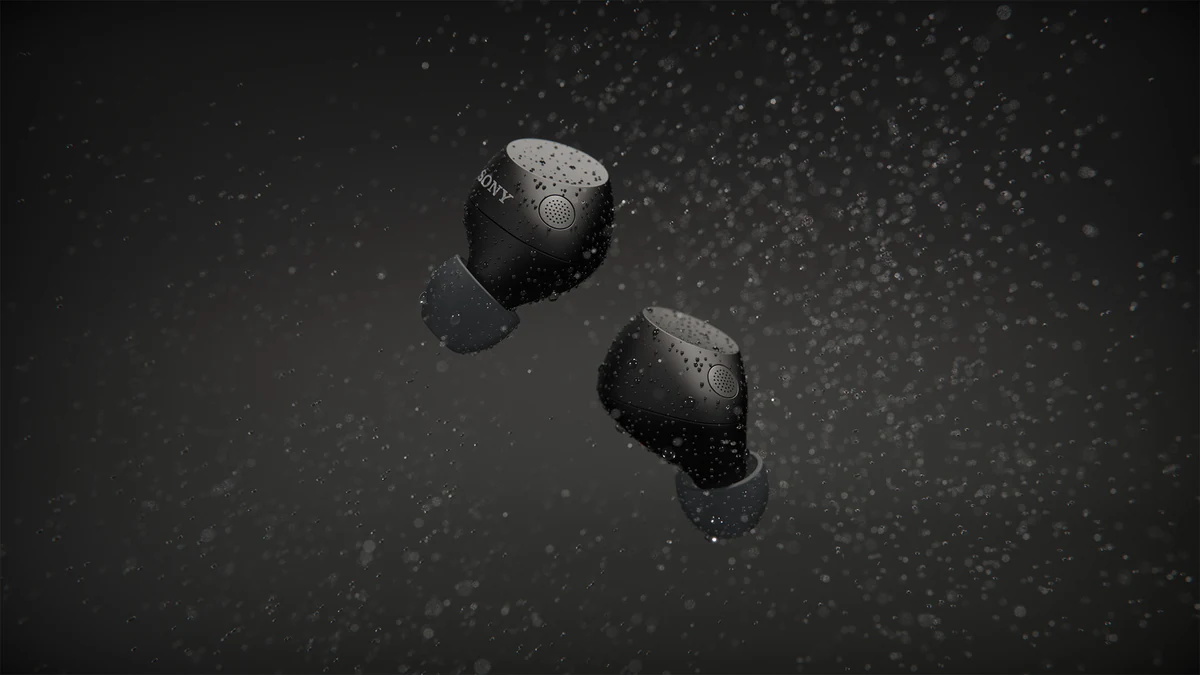


Two CGI segments for ImageNova's Sony WF-C710 commercial.
- Project
- Sony WF-C710, for ImageNova
- Creative Director
- Thomas Howcroft
- Director
- Connor Hamilton-Smith
- Producer
- Alex Mann
- Software
- Keyshot · Adobe Creative Cloud
- Delivered
- Two short animated segments for the launch commercial
How do you decide what a product launch film should reveal first?
For a product launch film, a lot of the time we need to decide what feeling the viewer needs to feel before they start to see the device reveal, or yeah, what features might be highlighted. Like a shot could be technically polished, but we want to really gain, depending on what the product launch film is for, we want the users to have a feeling about what they're seeing while they're watching the video, to really make an impact on their emotion, so that they remember what they've just seen.
Planning your project
Every frame has an intention.
XO3D contributed two short animated segments and rendered colourways to the Sony WF-C710 commercial produced by ImageNova. The work had to fit the surrounding campaign, rather than become a separate visual treatment.
Tell us about your brief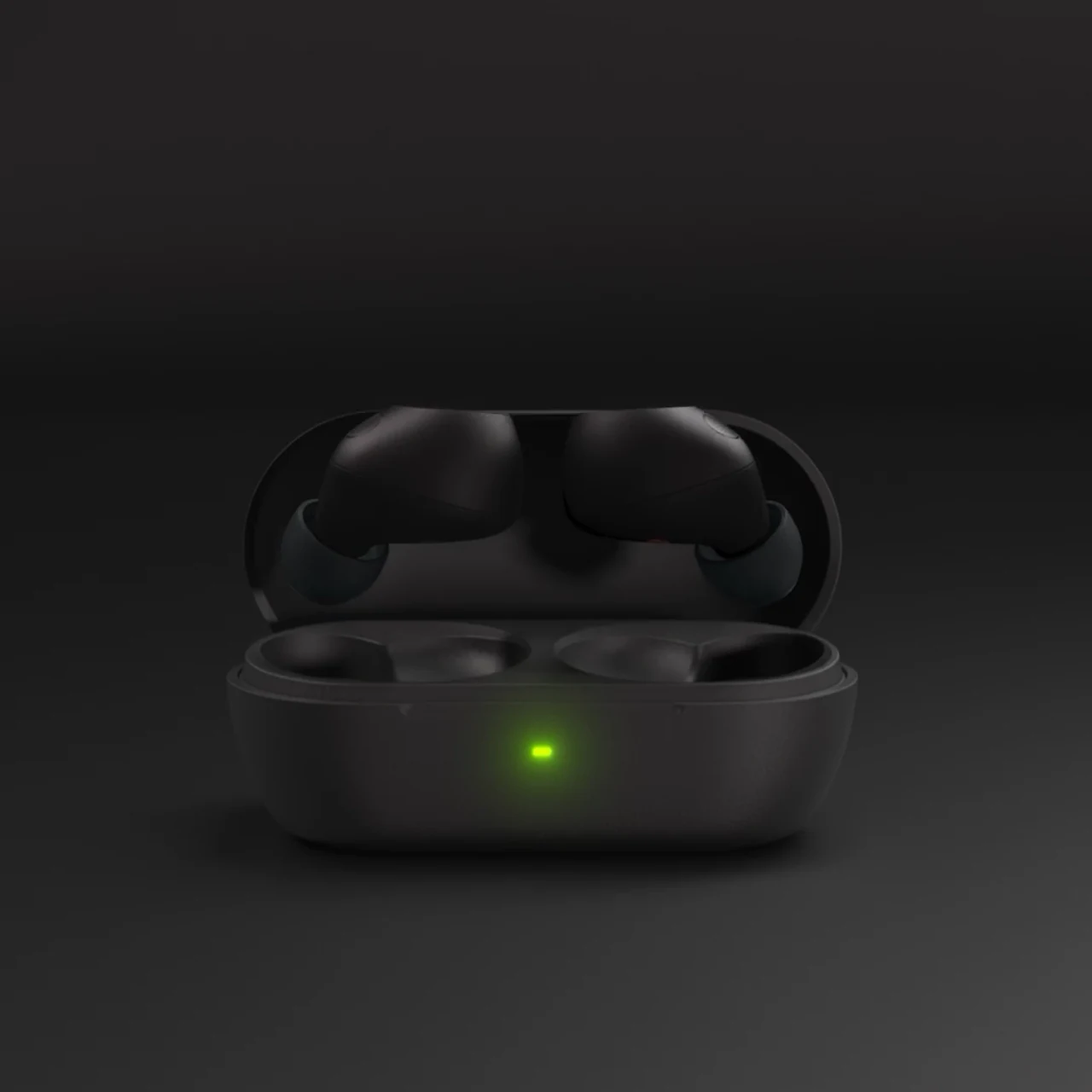
Match the surrounding photography.
Lighting was developed against ImageNova's photographs for the rendered colourways composited into those images. The case study explains the lighting iterations and the material adjustments made for the simulated water droplets.
Use the finished work and the recorded production explanation together when assessing a similar brief. The case study identifies the contribution XO3D made and the production roles behind it.
Updated
Before you brief
Your programme questions.
How long is a product launch film?
A hero film typically runs 30 to 60 seconds and can run to 90. Feature and explainer films follow the story rather than a fixed running time. Examples include G-Lab at 40 seconds and AUAR at 36 seconds.
Can you make a product launch video before the product is manufactured?
Yes. We work from CAD, engineering specifications and brand references. Nanuskate’s launch CGI was made before full production. Share the current design revision and identify what is still changing.
Is a product launch animation the same as a product launch film?
Buyers use both terms. Animation is the technique; a launch film is the directed result, with a story, edit, sound and final grade.
Which campaign formats can be delivered from one film?
The agreed set can include 16:9, 9:16, 1:1 and 4:5 versions. Each composition is reviewed for its placement. We plan extra canvas where a crop works, or a separate camera where vertical framing needs it. The AUAR example above shows a delivered vertical shot.
How long does a hero product CGI film take to produce?
We set the schedule after reviewing the product, source files, story, shots, variants and outputs. A fixed launch date is planned backwards through production, including client review time.
What should a product CGI film brief contain?
The product, audience, central message, channels, launch date and approval team. Add available CAD or technical files, finish references, brand guidance, required formats and any claims needing formal sign-off.
Can you join an existing campaign?
Yes. Share the established direction, storyboard, edit or live-action plates so the handoff can be defined.
Do we need a finished storyboard?
No. Start with the product, audience and intended message. Existing creative material is useful where it exists.
Start the conversation
Have a product that deserves a film made for it?
Tell us what you are working on. We will read the brief, share how we would approach it, and tell you honestly whether we are the right studio for it.
Prefer to talk it through first? Book a 15-minute call
5.0 from 76 Google reviewsLovie Awards 2026: Bronze and People's Lovie