
Product films, launch visuals and interactive experiences.

Tell us about your brief Book a 15-minute call
View all pages

XO3D Studio · 3D Animation

Exploded Animations: Making the Assembly the Story

Every part, in motion.

Exploded animations pull the product apart on screen. Components separate, drift and rotate in mid-air, revealing how the product goes together. It is the highest-impact shot on the launch for engineered products where the assembly itself is the story.

Overview

The reveal that makes engineering visible.

Consumer electronics, industrial hardware, appliances and robotics all lean on exploded animation for launch. Where the value proposition is inside the product, the assembly view sells it.

The shot depends entirely on the 3D asset. Hierarchy has to be structured for component-level movement, and materials have to hold up under macro inspection.

What's covered

The main varieties, in detail.

Radial explode

Parts moving out from centre.

Every component separating radially from the product's core. Classic engineering-reveal shape.

Axial explode

Parts sliding along axis.

Components separating along a single axis. Ideal for stack-assembled products.

Sequential build

Assembly, one part at a time.

Parts flying in and connecting in sequence, telling the assembly story step by step.

Cross-section reveal

The interior exposed.

Combined section and explode, showing internal detail as parts separate.

Callout annotations

Explode with feature labels.

Exploded animation with on-screen labels calling out named components. Educational and marketing.

Hero shot within launch

The hero moment of the launch film.

Exploded sequence inside the hero product film, timed as the reveal beat.

Video

Flash Motors, logo detail beat.

A three second close-up beat on the controller logo, the kind of detail shot that punctuates a longer exploded sequence.

Advantages

Why brands commission it.

  • Communicates engineering value.

    Where the value is inside, exploded animation sells it. Buyers and investors see the engineering, not just the shell.

  • High-impact hero moment.

    An exploded shot is often the single most memorable frame in a launch film.

  • Reusable across marketing.

    Same shot works for PDP, investor deck, sales enablement and PR.

  • Best-in-class for crowdfunding.

    Kickstarter and Indiegogo campaigns lean heavily on exploded animation for backer education.

Trade-offs

What to plan for.

  • Hierarchy setup is essential.

    The 3D asset must have proper component hierarchy. Late-stage hierarchy fixes are painful.

  • Every part must model well.

    Explode reveals every part at close range. Under-modelled components show up immediately.

  • Not every product benefits.

    Products without meaningful internal complexity get little from exploded animation.

  • Timing is craft.

    Rushed explode timing feels frantic. Slow explode feels tedious. Directed timing takes iteration.

Process

How the work is produced.

  1. STAGE 1

    Brief and hierarchy plan.

    Which parts explode, which stay assembled, in what order and at what pace.

  2. STAGE 2

    Modelling and hierarchy.

    3D asset structured for component-level movement. All exploded parts modelled to close-view quality.

  3. STAGE 3

    Animation blocking.

    Explode pattern blocked in playblast to check pacing and geometry.

  4. STAGE 4

    Cameras and framing.

    Cameras that follow the explode, revealing key components at key moments.

  5. STAGE 5

    Rendering and finish.

    Full render with motion blur and depth of field. Compositing pass ties it together.

  6. STAGE 6

    Cut-downs and PDP.

    Hero explode cut into short-form for social and silent loop for PDP.

Who this is for

Built for teams shipping the launch.

Engineering-led product marketing teams. Industrial, medical, robotics and consumer electronics brands.

Teams explaining a product before release, and agencies developing a technical launch, can use an exploded sequence to clarify component relationships.

Testimonial

The team at XO3D were a pleasure to work with on one of our big product launches. They rendered, batched, and saved out literally thousands of images for us. Every single one came out perfect.

Caitlin

D'Addario Europe

For sibling topics, see 3D product animation and technical animations.

Thomas Howcroft

Written by

Thomas Howcroft

Founder and Creative Director

Engineering-led realism · Campaign-ready visuals · Senior client partner

FAQ

Common questions, answered.

Is exploded animation only for engineered products?

Not exclusively, but it works best where the assembly is meaningful. Simple products with few components get less from an explode shot.

Can exploded animation be produced from CAD?

Yes, and CAD is the ideal source. Component hierarchy is often already structured, saving significant modelling time.

How long is a typical exploded shot?

6 to 15 seconds for a hero explode. Longer for sequential build or callout-annotated versions.

Can we produce exploded animation before manufacture?

Yes. With CAD, exploded animation is often finalised months before the physical product ships.

Working on a project?

Tell us about it.

Thomas or Alex replies personally, usually within one working day.
Planning your project

Let the construction tell the story.

An exploded animation separates a product into visible components. It can reveal an internal feature, explain the relationship between parts or create a controlled moment in a launch film.

The technique is strongest when the assembly itself helps the audience understand the product.

Tell us about your brief
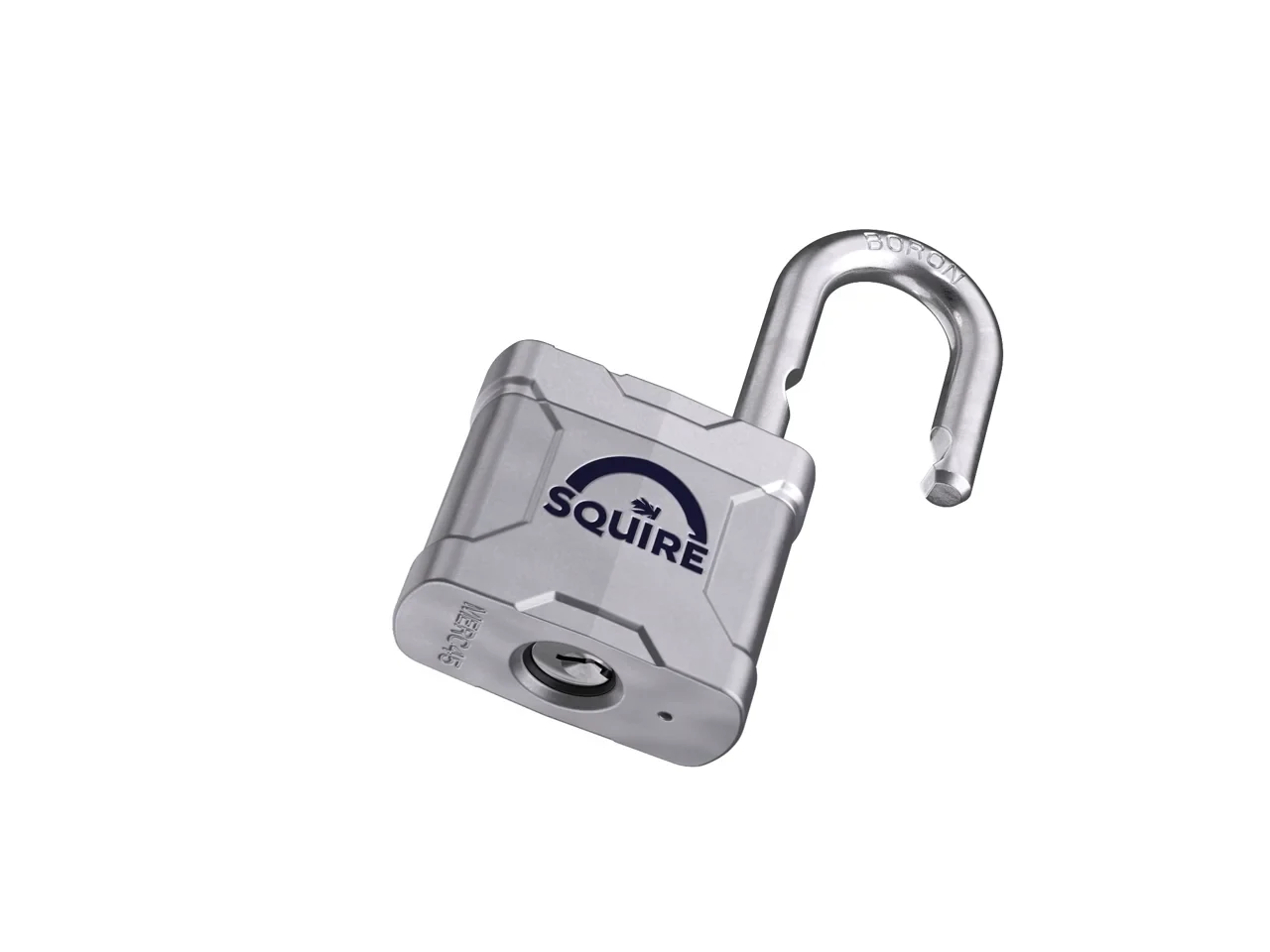
Exploded view of Squire lock components
Squire lock animation produced with Curious Agency. Explore the project

Decide what the reveal proves.

Start with the detail that matters. Is the viewer meant to understand a mechanism, a material layer or the relationship between two components?

Showing every part can obscure that point. Select the level of detail that supports the explanation.

Choose the movement.

An axial separation suits a product organised around a shared direction. A sequential reveal introduces parts in a chosen order. A cutaway can preserve more context when a full separation would be confusing.

The component hierarchy and model need to support the movement. Internals that will become visible must be represented from adequate source information.

Keep the product readable.

Use a stable reference, deliberate spacing and enough time for the viewer to connect the parts. Labels should point to specific information.

Macro surfaces need the same attention as the exterior. A reveal loses credibility when newly exposed components look less resolved than the housing.

Review the meaning.

A cinematic reveal is not necessarily a real assembly instruction. Confirm whether the sequence is explanatory, promotional or procedural, and review it accordingly.

A launch shot can also supply stills, but a useful technical diagram may require a different view and composition.

Exploded-animation questions.

Does every product need one?

No. Use it when the interior or assembly is relevant to the story. A clear exterior view may be stronger for another brief.

Can it be made from an exterior model?

Visible internal parts need appropriate source information and modelling. Assess the asset before committing to the shot.

Bring the detail worth revealing.

Tell us what the audience needs to understand beneath the surface.

Updated

About the studio

XO3D is a director-led product CGI studio, incorporated as XO3D Ltd in 2019 (UK Companies House 11876020). Founded by Thomas Howcroft (Founder and Creative Director) and Alex Mann (Co-Founder and Managing Director). Based at the Business and Technology Centre in Stevenage, UK, with representation at 244 Fifth Avenue, New York. We work with tech, industrial and premium consumer brands on product films, launch stills and interactive experiences.

That makes us the right choice for launch-critical work where the visual standard has to be high and the product may not exist yet.

It makes us the wrong choice for three things, and it is worth establishing that now rather than later.

  • Hundreds of routine SKUs to a fixed template. A volume batch renderer will do that faster and for less. Paying for creative direction on work that does not need a creative decision is poor value, and we will tell you so.
  • A permanently live, self-service configurator across a large range. That is platform software. We can build the assets and, where it is the right route, the experience itself, but the ongoing system is not a studio deliverable.
  • The campaign idea itself. If what you need is the strategy, the audience work and the media plan, start with an agency. We are frequently the production partner behind one.
How XO3D compares to the other five supplier models